Since last summer, Vitalthings has been working on developing Guardian Fall – a sensor that detects and alerts users to movement and falls. The sensor is contactless and camera-free, and is designed for use in private homes, hospitals, and municipal care homes and residential care facilities. This spring, Guardian Fall has been tested in Volda municipality.
Facts about falls in Norway
- Falls in hospitals, care homes and among people living at home are a major and costly social problem.
- Research shows that falls are considered the second most costly health condition in Norway, with annual expenditure of NOK 14.5 billion.
- Falls resulting in hip fractures results in high excess mortality – in other words, the group that experiences falls is at a higher risk of death than older people who do not.
- Falls also lead to reduced independence, an increased need for care and, eventually, the need for a place in a care home for many people.
- Sources:
- Disease-specific health expenditure by age, sex and type of care in Norway: a national health registry study: https://link.springer.com/article/10.1186/s12916-023-02896-6
-
Cause-specific excess mortality following hip fracture: the Norwegian Epidemiologic Osteoporosis Studies (NOREPOS): https://link.springer.com/article/10.1186/s12877-023-04013-x
Vitalthings’ new fall sensor, Guardian Fall detects and alerts you to falls and movement via a radar sensor that is mounted on the ceiling in rooms such as bedrooms and bathrooms. Guardian Fall has been developed using Vitalthings’ algorithms and signal processing, and is contactless, requiring no camera. Combined with Vitalthings’ digital monitoring solution; Vitalthings With the Guardian H10, healthcare professionals will be able to continuously monitor patients’ sleep, breathing, movement, position and falls. All information is collected and displayed on a screen – Guardian Insights – which provides healthcare professionals with a real-time overview and a fact-based foundation for prioritising correctly and responding quickly when something actually happens.
Volda Municipality has been a partner in the development of Guardian Fall, helping to identify needs and test the solution.
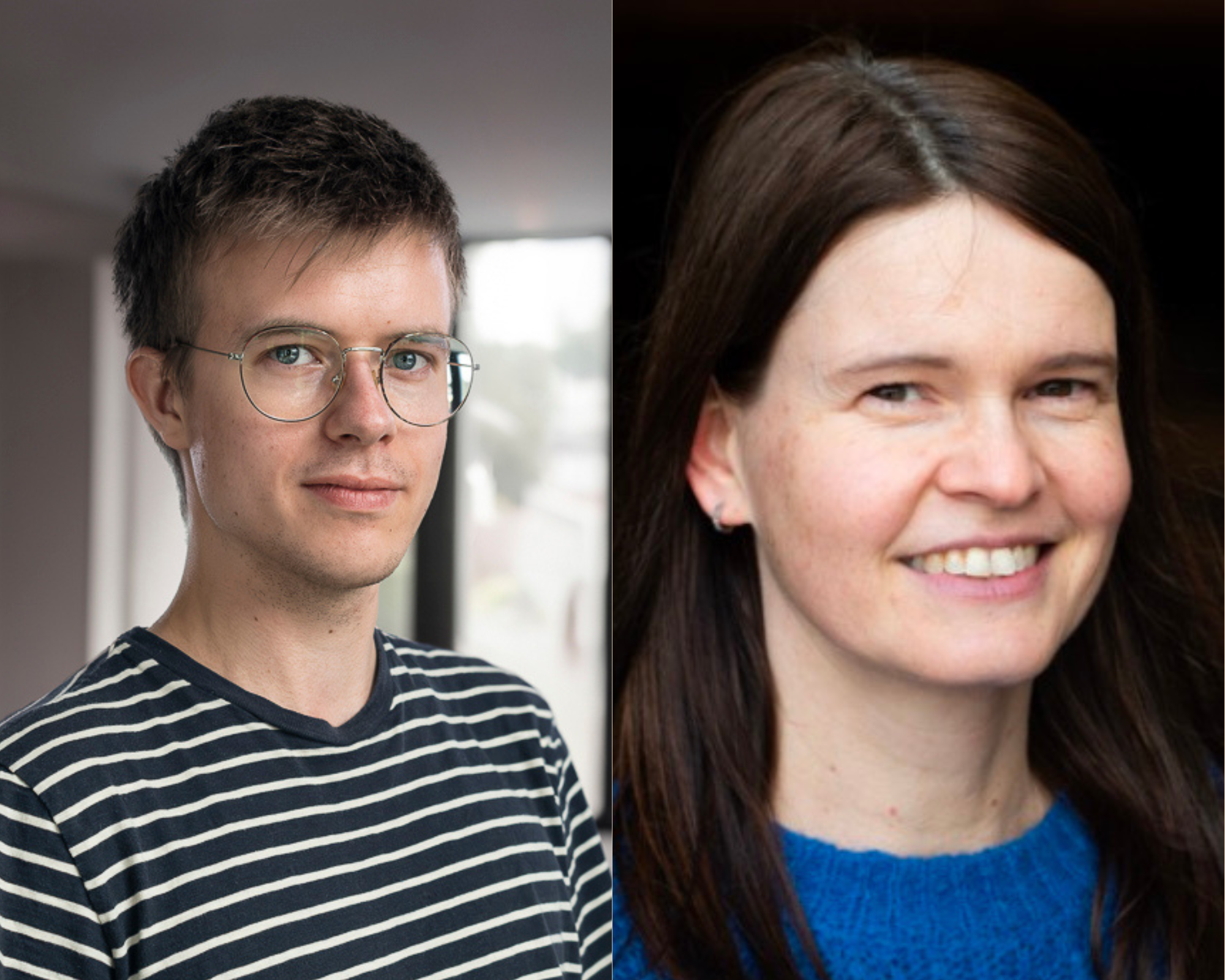
– Falls are a major problem. We have great confidence in the use of radar technology to detect and alert users to falls. It’s great that the fall sensor can be connected to Guardian Insights, so that all user data can be collected on a single platform. The fact that Guardian Fall is mounted on the ceiling and isn’t camera-based means it will work better in the bathroom than a camera ever could. Moreover, many users do not like wearing technology attached to their bodies, says Karianne Sveen Orvik, who is the welfare technology coordinator for Volda municipality.
«»We have great confidence in the use of radar technology to detect and warn of falls"
Karianne Sveen Orvik, welfare technology coordinator for Volda Municipality
Sees great potential in private homes
To date, the local authority has installed 56 Guardian Fall units in 28 residential units across nursing homes and care homes. Sveen Orvik sees great potential in scaling this technology for use in private homes. This is possible because Guardian Fall will have built-in 4G, and will therefore work regardless of whether the home has a local internet connection.
– Our main focus going forward will be on implementing digital monitoring solutions in private homes. In the event of a fall or other medical emergencies at home, we want home care services to receive prompt and adequate information about the incident so that they can prioritise their resources effectively. A fall can cause a great deal of distress for the user, which is why it is important to detect the fall and act quickly. A high risk of falling also causes a great deal of stress for relatives, who have therefore been calling for fall detection solutions. In the long term, we hope the technology will also be able to support healthcare professionals in staying ahead of incidents, for example by combining sleep data from Vitalthing’s Guardian H10 with movement data and vital signs such as heart rate and breathing. This will enable targeted preventive measures tailored to the user. We believe Guardian Fall can deliver significant benefits here, says Sveen Orvik.
We have reduced night-time staffing levels
Volda Municipality has been using Vitalthings’ digital monitoring solutions for many years. The municipality was an early adopter of the Somnofy sleep monitor, and in March last year it became the first municipality to introduce the Vitalthings Guardian H10 contactless health monitor. It is now installed in all nursing home rooms and all staffed care homes, as well as some unstaffed care homes. The Vitalthings Guardian H10 has also been installed in several flats for people with intellectual disabilities.
“The Guardian H10 has made it possible to reduce and reorganise night-time staffing. It helps night-shift staff to prioritise their tasks, so that they can spend their time with residents who are awake and need assistance, whilst those who do not require supervision can sleep in peace,” explains Sveen Orvik.
«»Because the Guardian Fall is ceiling-mounted and not camera-based, it will work better in the bathroom than a camera ever could."
Karianne Sveen Orvik, welfare technology coordinator for Volda Municipality
Radar technology covers the entire room
Gustav Tolstrup Christensen works as a Senior R&D Engineer at Vitalthings. He has been involved in the prototyping and development of several of the company’s solutions. Since October, he has been leading the development of Guardian Fall.
– Much of our time has been spent building the infrastructure needed to extract raw data, and developing systems and algorithms capable of interpreting this data accurately and correctly. “We have strong expertise in data-driven algorithm development within the company and a great deal of experience in creating robust sensor systems,” says Tolstrup Christensen.
He says that radar technology is particularly well suited to fall detection.
– Unlike many other technologies, radar makes it possible to detect movement throughout the entire space whilst safeguarding privacy in a secure manner. I look forward to continuing to work on this so that we can scale up the solution, says Tolstrup Christensen.
Digital supervision provides benefits in terms of finances, working environment and patient safety
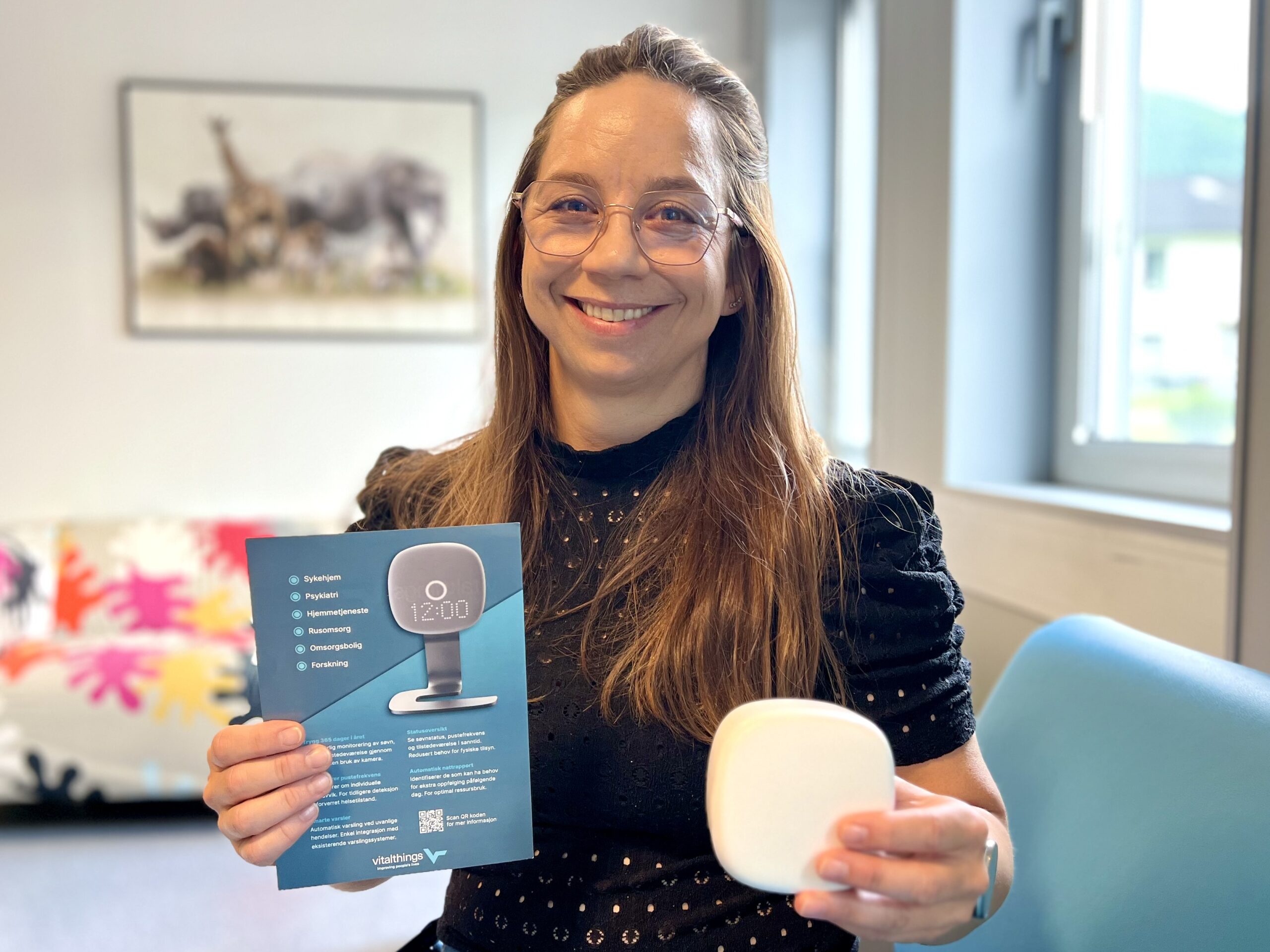
Digital inspection using radar is less intrusive than digital inspection using cameras and physical inspection. It saves millions, improves the working environment for employees and increases patient safety. These are the conclusions of three mini-methodological assessments prepared by the municipalities of Stad, Luster and Stryn with guidance from the Norwegian Institute of Public Health.
 EN
EN  NO
NO