
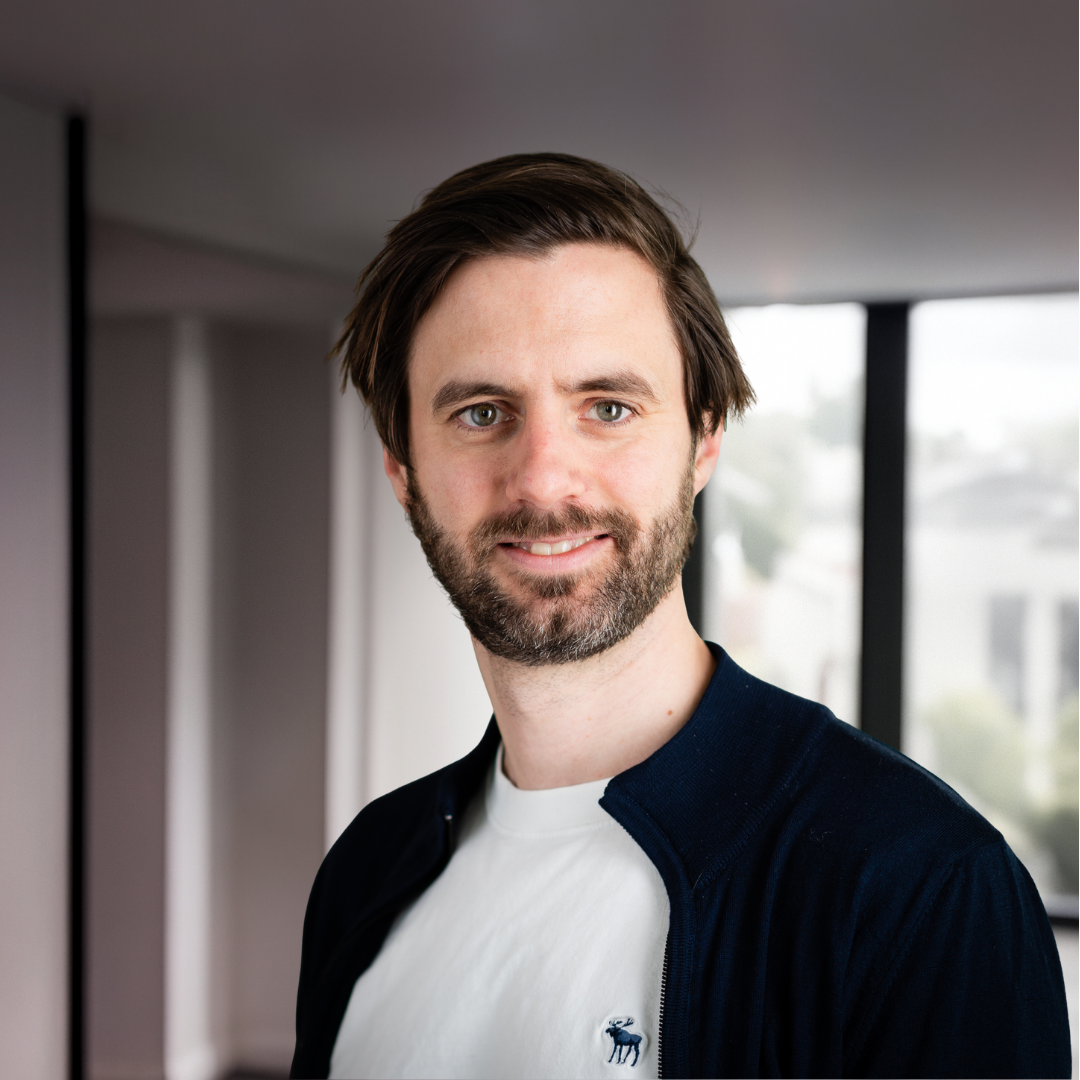
Ståle Toften recently defended his doctoral thesis "A comprehensive review of radar technology for sleep and respiratory monitoring" at NTNU. With it, he puts behind him seven years of research on sleep and breathing, and a conclusion that many will find remarkable.
"A comprehensive review of radar technology for sleep and respiratory monitoring" (2025)
- The thesis examines how radar technology can be used to monitor sleep and breathing completely without sensors attached to the body. Algorithms have been developed and thoroughly validated that can score sleep stages, detect sleep apnoea and measure breathing rate continuously both at home and in hospital.
- The work shows that radar signals combined with machine learning can provide precise and automatic assessments of both sleep and respiration. The technology can identify breathing stops and measure breathing rates in both sleep and wakefulness with high accuracy.
- Although the thesis does not investigate clinical effects directly, previous research shows that continuous monitoring can contribute to earlier detection of deterioration, safer patient follow-up and more efficient use of healthcare resources. The results of this thesis indicate that radar-based technology can be an important step in this direction.
– We have shown that our algorithms in combination with our radar-based, contactless technology are very suitable for measuring sleep and respiration - not only because the technology is contactless and patient-friendly, but because in many cases it is more accurate than wearables*, says Toften, who currently works as Chief Technology Officer at Vitalthings.
Building on market-leading expertise in radar, sleep and breathing
When Vitalthings was established in 2017, the founders had already been working for three years on the idea of developing a digital sleep monitor. The idea was based on the founders' in-depth knowledge of radar technology and how this technology can detect and measure human activity.
–Over the years, Vitalthings has developed leading expertise in radar technology, and we work deeper into this technology than most others, says Toften.
He joined Vitalthings in 2018, as the company's second full-time employee. He has worked with sleep and respiration for many years - both as a researcher and Chief Technology Officer at Vitalthings. Already in 2020, he published research on the company's first non-contact sleep monitor, Somnofy, comparing it to the gold standard for sleep studies - polysomnography (PSG). The article showed that Somnofy produced highly accurate data on non-contact sleep analysis. This data proved to be more accurate than other contactless technologies and wearables. At the time, Vitalthings was already collaborating with a research group at the University of Bergen on the Somnofy sleep model, and Toften was given responsibility for leading this process.
Questions that Toften has discussed are how accurate different algorithms for measuring sleep and breathing with radar technology can be. He has also looked at which algorithms are best suited to a clinical setting.
– The 2020 study was important for two reasons: Firstly, we showed that contactless sleep monitoring can be stable and accurate. Secondly, it gave sleep researchers something concrete to refer to: Documentation in peer-reviewed, scientific journals, says Toften.
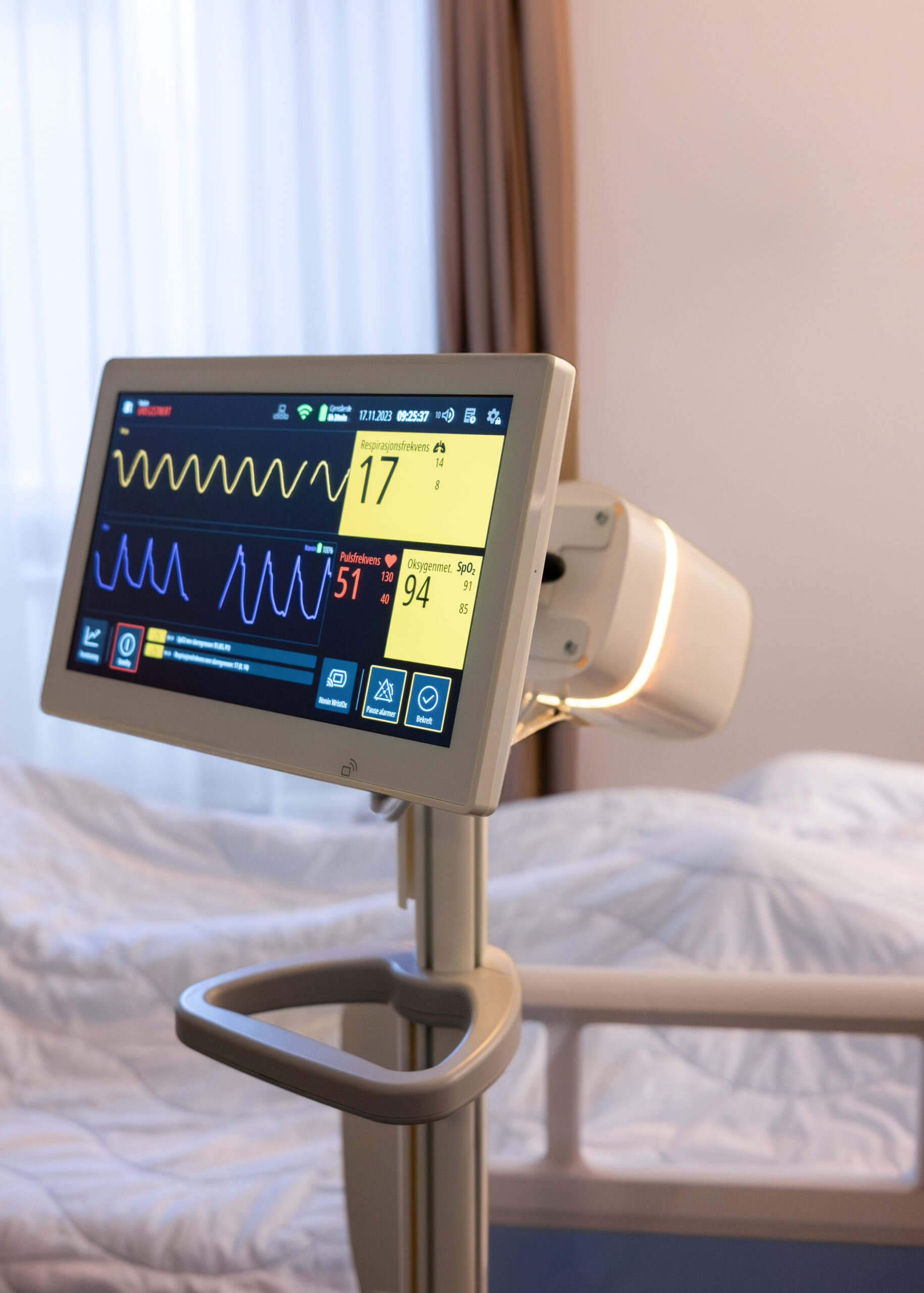
The patient monitor of the future
Guardian M10 offers continuous and precise monitoring of vital signs. The system monitors breathing rate and breathing pattern contactlessly, without the need for physical sensors.
You've taken a slightly unusual route to a doctorate. Can you explain the difference between a PhD and a Dr Philos?
– Most people do a PhD, where you are employed and formally affiliated with a university throughout your studies. In contrast to this, I have taken a Dr Philos.. This means that most of my research has been done through my work at Vitalthings. When the university believes you have published enough and solid enough research, you can apply to have this assessed as a doctorate.
When Toften finished the first article, one of the co-authors thought that this could be the start of a doctorate. The co-author was Ståle Pallesen, a professor at the Department of Community Psychology at the University of Bergen and one of Norway's most renowned experts on sleep and sleep disorders.
In the autumn of 2024, Toften was the lead author of a study which showed that the patient monitor Vitalthings Guardian M10 has the most precise measurements of breathing rate that have been published with contactless technology. Here, too, the measurements proved to be more precise than wearables in addition to manual measurement, typically used on regular hospital beds.
Technology in clinical settings
In your research, you bridge the gap between technical and medical research. Please elaborate on this.
– Radar-based contactless monitoring is basically about signal processing, algorithms and optimisation of radar technology. On the other hand, you have medical research, which is concerned with physiology, clinical pathways and patient treatment. My PhD lies at the intersection of these two: the application of radar technology to medical use. I'm trying to bridge the gap - showing how the technology needs to be customised to work in real clinical settings, not just in a perfect lab environment. An important point is that you need to test and validate in real environments: in patient rooms, in hospitals and in people's homes. Technical journals are often satisfied with lab results, but for healthcare, it's crucial to know how the technology works where it will actually be used," says Toften.
An important finding in your research is how well contactless monitoring of breathing can work in practice. How do you assess these results in light of what else is known from wearables research?
- It may sound somewhat intuitive that something attached to the body - like a watch or a sensor - should be the most accurate. But in reality, it's more complicated. The difference lies in what we measure, and how. Non-contact radar measures breathing rate directly by looking at movements in the chest and body. Wearables often measure breathing indirectly, via variations in heart signals and blood flow, which in turn are affected by respiration. So we're really talking about two steps: First, you measure the heart signal, and then the breathing pattern is estimated based on how this signal changes with respiration. This extra step introduces more uncertainty and a weaker link to the actual breathing movement. With non-contact monitoring, we can see the actual breathing, which in most cases provides more precise respiratory parameters.
The best of both worlds
Toften says that these findings have also attracted some attention in clinical circles
– Many people probably have a perception that sensors connected to the body need to be more accurate. But when we explain that we're actually measuring breathing directly, and not via a detour through heart signals, things start to fall into place. We're actually getting our money's worth. Contactless monitoring is not only more comfortable for the patient, it also seems to be more accurate than wearables for breathing and sleep.
In the future, Toften will continue to conduct research to gather more knowledge about how radar-based, contactless monitoring can be even better suited as a medical tool - both in hospitals and in home follow-up.
– Our market-leading expertise in radar, breathing and sleep gives us a unique opportunity to further develop this technology into new medical areas. We already have several research projects underway, and look forward to publishing more findings in the years to come," concludes Toften.
*Watches, rings, sensor patches or similar body-worn technology
 EN
EN  NO
NO