
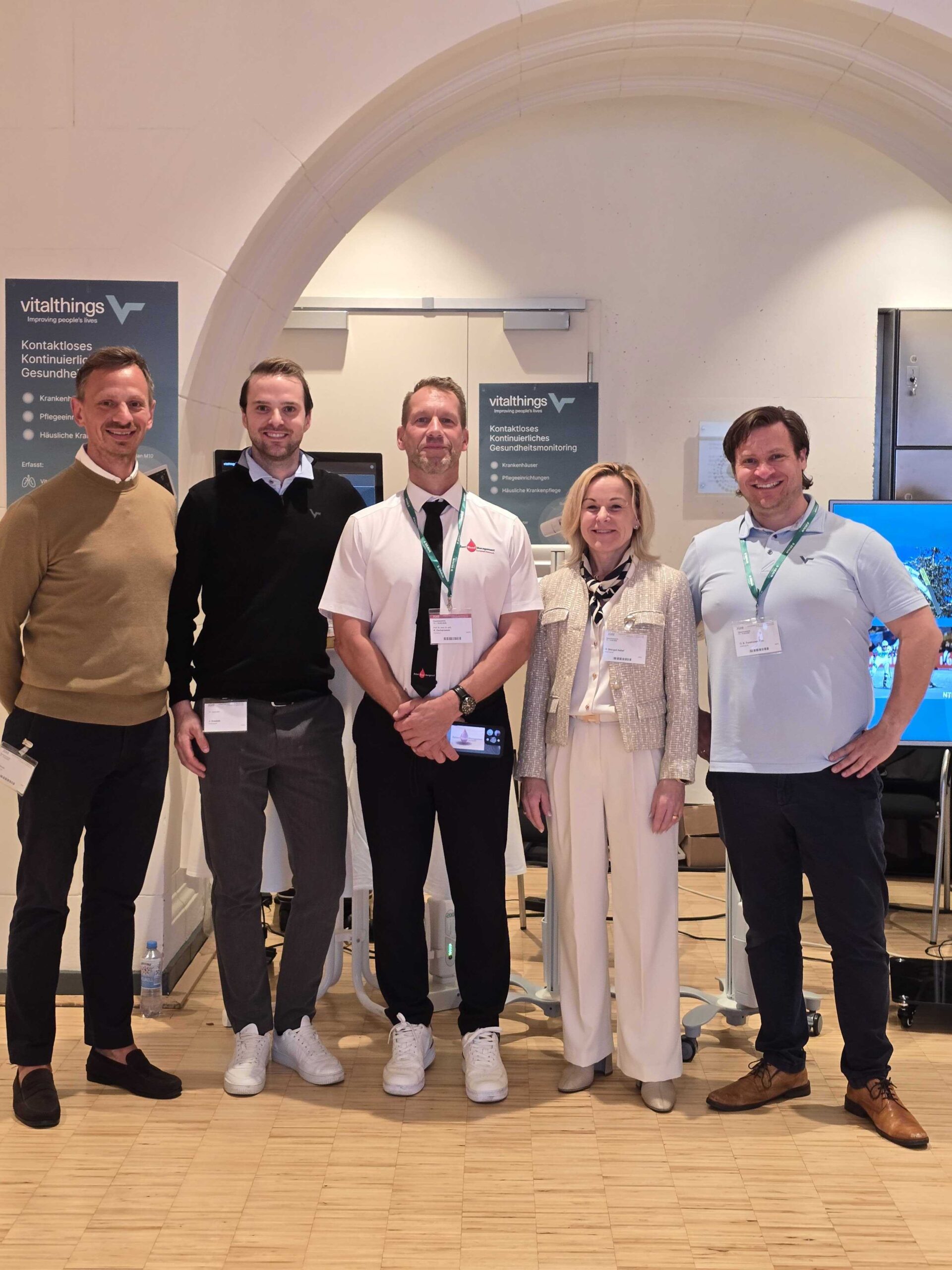
Together with our partner, mediq Innovation Experts in Germany, we have integrated Vitalthings Guardian M10 into leading German clinics to analyse workflows and generate evidence of cost-benefit.
About Vitalthings and Germany
- Vitalthings Guardian M10 is a proactive patient monitor that offers continuous and precise monitoring of vital parameters. The system monitors breathing rate and breathing patterns contactlessly, without the need for physical sensors.
- The patient monitor is now being piloted in four German clinics:
- University Hospital Frankfurt am Main
- Alb Fils Klinikum in Göppingen
- German Army Hospital Ulm
- Wahrendorff Clinic
- In collaboration with mediq Innovation Experts, the pilot is laying the groundwork for a wider commercial roll-out in 2026.
The German healthcare system is heading into a perfect storm. By the early 2030s, roughly one in four Germans will be of retirement age, greatly increasing the demand for treatment while shrinking the labour force. At the same time, hospitals are already facing an estimated shortage of around 150,000 nurses, and a shortage of an estimated 300,000 - 500,000 by 2030 if current trends continue.
The consequences can be significant. German and European research shows that understaffing among nurses is linked to higher mortality rates, more falls, infections, pressure ulcers and medication errors, and a measurable decline in perceived quality of care. Understaffed units also experience more burnout, absenteeism and turnover, which could lead the healthcare sector into a negative spiral of understaffing and weakened healthcare provision.
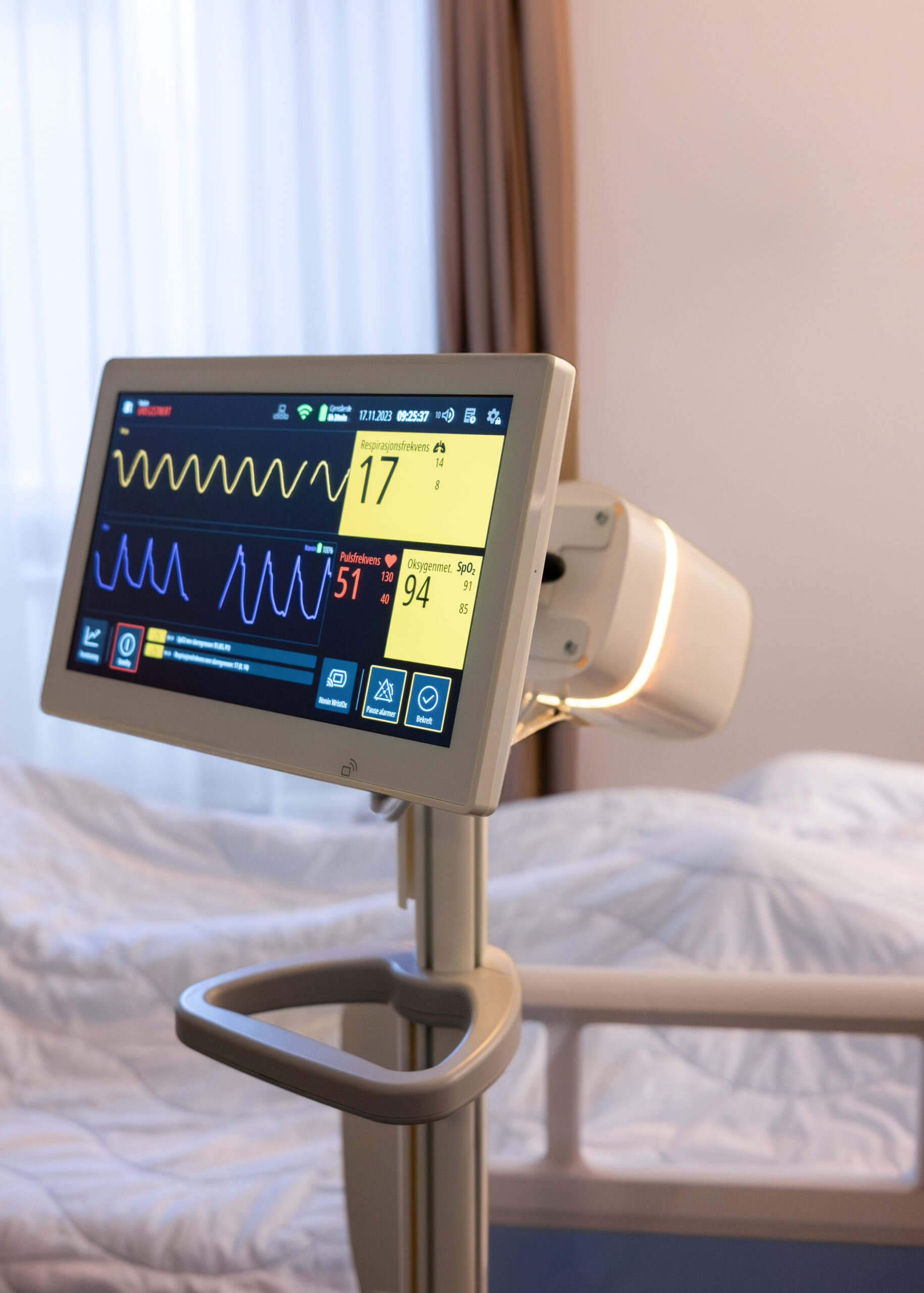
The patient monitor of the future
Guardian M10 offers continuous and precise monitoring of vital signs. The system monitors breathing rate and breathing pattern contactlessly, without the need for physical sensors.
Can offer new treatment options
The economic impact could be huge. Germany already spends about 31% of GDP on the health and social care sector, including pensions and health, amounting to approximately €1.3 trillion per year, and faces rising health and long-term care costs as its population ages. High rates of sickness absence increase labour costs and lost productivity every year. Without productivity-enhancing innovation, the system risks rising costs, burnout and limited capacity.
This is the serious backdrop against which Vitalthing's Guardian M10 is now being trialled. The technology will provide contactless, continuous monitoring on wards to detect early deterioration in patients while reducing manual supervision. By automating routine observation, the system aims to free up time for nurses, reduce transfers to intensive care units and help hospitals manage staffing shortages without compromising safety.
– Vitalthings Guardian's contactless continuous monitoring sensors could prove to be ground-breaking and offer new possibilities in diagnostics and treatment, says Professor Dr. Kai Zachorowski, Clinical Director of the Department of Anaesthesiology, Intensive Care Medicine and Pain Management at the University Hospital Frankfurt am Main.
 EN
EN  NO
NO