
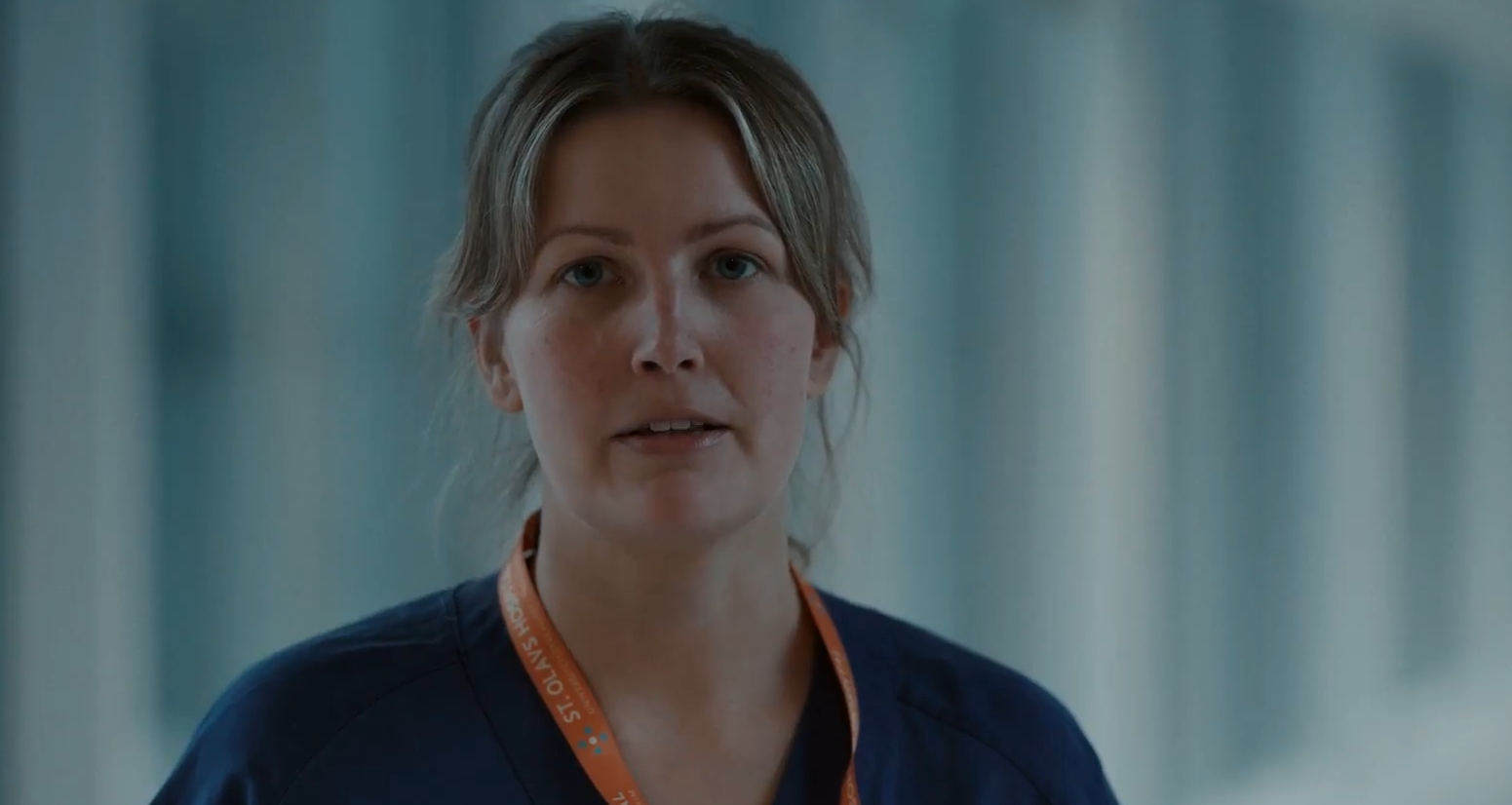
Freed-up time, increased patient safety and more quality time with patients. This is how Frida Eriksen Eines, assistant head of the Pulmonary Department at St. Olav's Hospital, summarises her experiences with Vitalthing's Guardian M10 after four months of operation.
Vitalthings Guardian M10 and St. Olav's University Hospital
- In June 2020 , St. Olavs Hospital and the innovation project Autoskår received financial support from Innovasjon Norge AS to carry out a project for measuring vital parameters. After a thorough process of mapping the need for new technology in the Emergency Department, and dialogue with a number of potential companies, Vitalthings was selected as an innovation partner, together with DNV Imatis.
- In August 2024 , Vitalthings Guardian M10 received European medical approval in Class IIb, which means that the system has documented safety and performance to be used, among other things, for monitoring vital parameters.
- In November 2024 a clinical study conducted at St. Olav's Hospital showing that Vitalthings' Guardian M10 patient monitor has the most accurate measurements of patients' breathing rate ever published using contactless technology.
- In August 2025 , Menon Economics published a cost-benefit-analysisbased on studies at St. Olav's Hospital and five German hospitals, showing that Guardian M10 could provide annual savings of NOK 13.3 billion and free up to 1,350 man-years – in Norway alone.
- In October 2025, Guardian M10 was put into operation in three departments at St. Olav's Hospital.
- An evaluation study is currently underway at St. Olavs Hospital, where a total of 6,500 patients are being included to document various types of effects of Vitalthings Guardian M10. Eriksen Eines' experiences in this interview are based on her own subjective experiences so far.
- To find out more about the research done on Vitalthings Guardian M10, you can read here. Menon Economics has been commissioned by Innovation Norway to prepare a report on the potential benefits of introducing Vitalthings Guardian M10 in Norwegian hospitals. You can read it here here.
What are the main challenges in following up patients in the pulmonary department?
- Time and resources are a challenge. "We're used to dealing with the patient group we have, and we manage it, but we've often thought it would be useful to have a tool that could tell us how the patients are doing when we're not physically present," says Eriksen Eines, who has worked in the department for 10 years.
When did you find out about Vitalthings Guardian M10?
- The A&E department was the first to start testing and using Guardian M10. "I got involved about six months ago because I'm a professional development nurse. I thought this sounded really exciting. Being able to see trends and identify changes, and being able to follow patients when we're not physically with them. It's really beneficial," says Eriksen Eines, who adds that the department currently has 16 wall-mounted Guardian M10s installed. .
How has your experience been so far?
- If the patient is breathing faster, it could be a sign of deterioration. With the Guardian M10, we can detect this more quickly and take action earlier.
What benefits would you highlight?
- Previously, we made manual point measurements of breathing. The problem with that is that we don't know how the patient is breathing when we're not physically present. With the Guardian M10, I would say that patient safety is by far the most important improvement we see. We've had several patients say that they feel safer when the Guardian M10 is in the room, because they realise that it alerts them when there are changes, and that we get into the room quickly when that happens. Another advantage is the time spent. "In the long term, I think we'll see more efficient use of time. We used to spend five minutes per NEWS. Now we use two minutes. I would estimate that we currently save between 20 and 30 minutes per patient, per day with continuous measurements. It frees up time so that we can prioritise sitting down with patients and spend more quality time with them. The integration with medical records also saves time.
- For us nurses, it gives us peace of mind that we know more about how the patients are doing when we're not in the room with them. Several night guards have also stated that they feel safer and better knowing more about how the patients are doing between rounds at night," says Eriksen Eines.
What has it been like working with Vitalthings?
- "This has been an exciting project for the entire department. We've had good follow-up from Vitalthings, and the employees have been easy to work with and quick to respond when we've needed help or had questions," concludes Eriksen Eines.
Curious about Vitalthings Guardian M10?
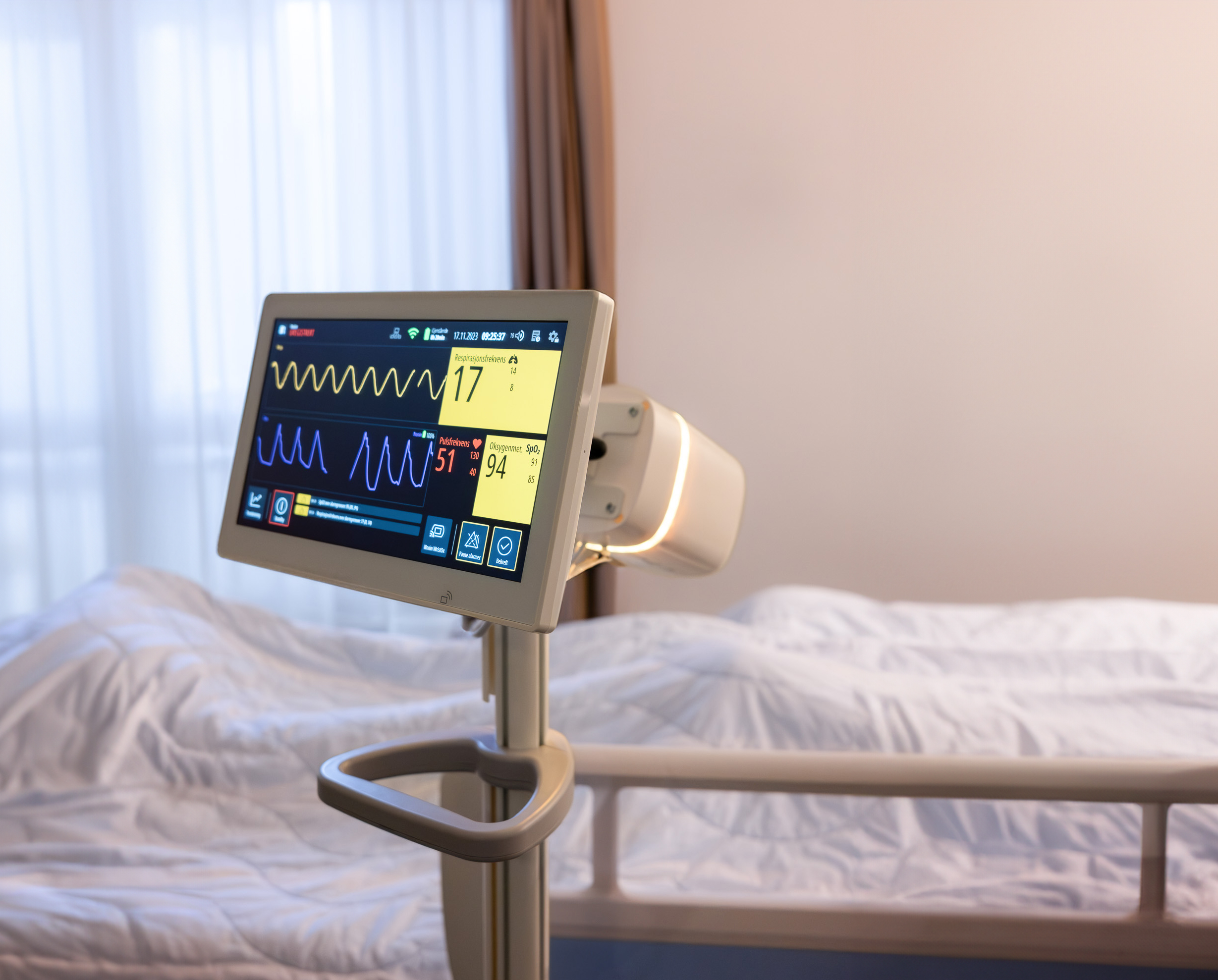
Guardian M10 offers continuous and precise monitoring of vital signs. The system monitors breathing rate and breathing pattern contactlessly, without the need for physical sensors.
The product is CE-marked in accordance with EU MDR (2017/745) risk class IIb. Vitalthings Guardian M10 is designed with an intuitive user interface, making it easy to use even for healthcare personnel with minimal experience with monitoring equipment.
 EN
EN  NO
NO